
Divisions
The Chair and Department of Pharmaceutial Technology operates three laboratories, each specializing in different research areas:
1. Division of Pharmacy Practice and Pharmaceutical Care
Head: Magdalena Waszyk-Nowaczyk, Assoc. Prof.
Staff:
- Arleta Matschay, PhD
- Weronika Guzenda, MSc
The Division of Pharmacy Practice and Pharmaceutical Care is an innovative space for education and research. Our focus is on practical training for students and pharmacists, enhancing their skills in professional counseling and pharmaceutical care, and fostering collaboration with patients and other healthcare professionals. We utilize modern teaching methods, including practice at the Medical Simulation Center. The laboratory also implements innovative development projects and promotes a holistic approach to patient health through personalized education.
We are pioneers in establishing a pharmaceutical care office, where consultations are held as part of the "New Drug" collaboration with the Greater Poland Chamber of Pharmacy and the Poznań Center for Specialized Medical Services. Students can explore their interests in the Student Scientific Association of Pharmaceutical Care. Our lab emphasizes quality, interdisciplinary collaboration, and modern healthcare solutions, contributing to the creation of national guidelines for pharmacists.
Collaborations:
- Medical University of Łódź (Łódź, Poland)
- University of Groningen (Groningen, Netherlands)
- Supreme Pharmaceutical Chamber (Poland)
- Greater Poland Chamber of Pharmacy (Poland)
- Poznań Center for Specialized Medical Services (Poznań, Poland)
For more details, visit: www.nowy-lek.pl
2. 3D Printing Division
Head: Anna Froelich, PhD
Staff:
- Barbara Jadach, PhD
- Monika Wojtyłko, MSc
- Piotr Gadziński, MSc
- Oliwia Kordyl, MSc
Following the latest trends in innovative methods of drug design and manufacturing, the team at the Department of Pharmaceutical Technology has been conducting research using 3D printing techniques for several years. One of the key scientific projects is titled “3D Printing as a Tool for Developing Transdermal Microneedle Systems with Enhanced Efficacy in the Treatment of Depressive Disorders” funded by the National Science Center under the Sonata program (Project Head: Prof. Tomasz Osmałek). This interdisciplinary project is conducted in collaboration with Poznań University of Technology, which helps enhance the skills of the department's staff and fosters partnerships for other research projects.
Collaborations:
- Poznań University of Technology (Poznań, Poland)
- Rutgers, The State University of New Jersey (New Jersey, USA)
- Queen’s University Belfast (Belfast, UK)
- Wrocław University of Economics (Wrocław, Poland)
- BIOFARM Sp. z o.o. (Poznań, Poland)
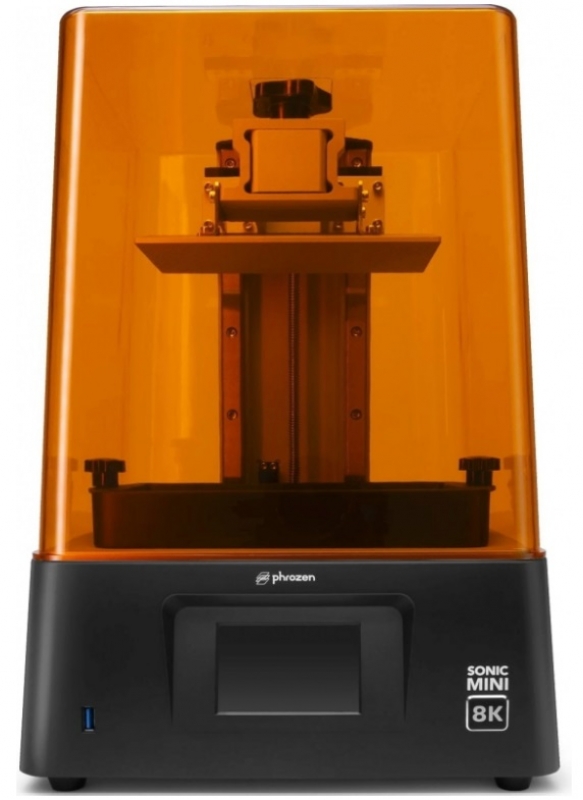
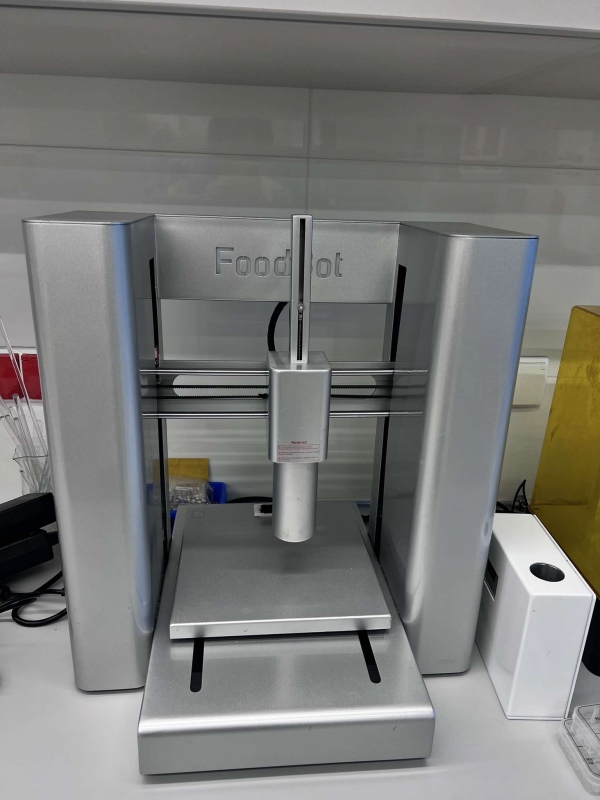
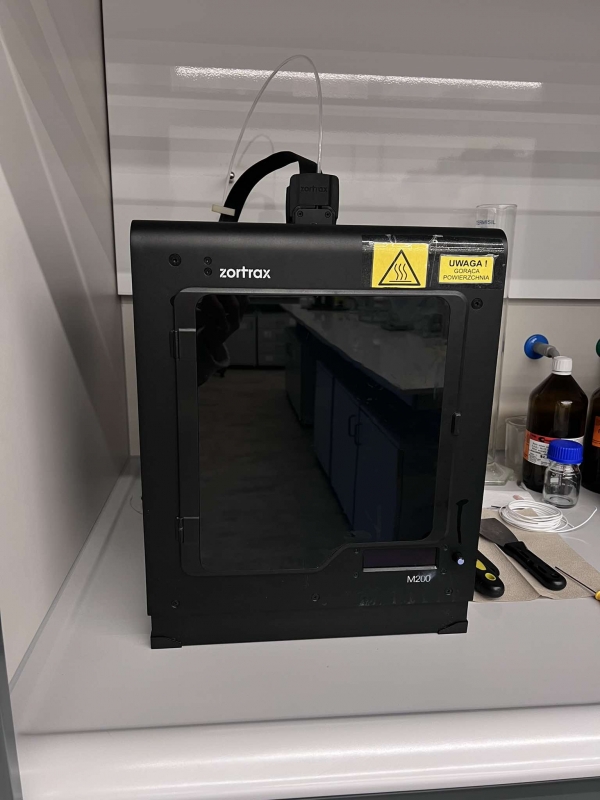
The department currently has six different 3D printers using various techniques for material processing:
- SLA resin printers: Anycubic Photon M3, Phrozen Sonic Mini 8K, Anycubic Photon Mono M5
- Semi-solid material printer: Tronxy MOORE1 MINI
- FDM printer: Zortrax M200
- Extrusion printer: Foodbot S2 Chocolate Food 3D Printer
The department is also equipped with the Anycubic Wash&Cure 2.0 device for post-processing 3D prints made from photopolymer resin.
 |
 |
|
SLA 3D Resin Printers |
||
 |
 |
 Foodbot S2 Chocolate Food 3D printer |
FDM 3D printer Zortrax M200 |
3. Industrial Pharmacy Division
Head: Marcin SKOTNICKI, Assoc. Prof.
Staff:
- Agata NOWAK, MSc Pharm.
Our state-of-the-art research labs are developing new materials and manufacturing methods to advance the challenges of manufacturing innovative pharmaceutical dosage forms. The Division emphasises pharmaceutical solids. We are focused on comprehensive solid-state characterisation. Properties that can be controlled by formulation include apparent solubility and dissolution rate, physical and chemical stability, and crystal polymorphic or amorphous form. Research in formulation addresses stability and solubility improvement. We use different manufacturing methods, e.g., freeze-drying or spray-drying, and various analytical techniques such as thermal analysis, spectroscopic techniques, and dissolution tests for solids characterisation.
In addition to our emphasis on comprehensive solid-state characterisation, we are actively engaged in the formulation development and evaluation of solid and semisolid dosage forms.
Collaborations:
- Biofarm sp. z o. o.
- Department of Chemistry and Biochemistry, Bringham Young University (Provo, United States)
- Department of Pharmaceutical Physics, Faculty of Pharmacy Carol Davila University of Medicine and Pharmacy, Bucharest, Romania
- Interdisciplinary Center for Preclinical and Clinical Research, College of Medical Sciences, University of Rzeszów (Rzeszów, Poland)
- School of Pharmacy and Pharmaceutical Sciences, Trinity College Dublin (Dublin, Ireland)
- Solid-state NMR Group, Department of Chemistry, Durham University (Durham, UK)
Keywords: industrial pharmacy, preformulation, polymorphism, amorphous phase, pseudopolymorphism, physical ageing, drug-drug/excipient compatibility, multicomponent systems, thermal analysis, differential scanning calorimetry (DSC), dissolution studies
PhD students
Applications from potential PhD students are welcome. PhD studentships are potentially available in any of the following areas: solid-state pharmaceuticals, amorphous pharmaceutical systems, multicomponent pharmaceutical systems, poorly soluble drugs and preformulation. For more info, please get in touch with Prof. Marcin Skotnicki.
We also utilize equipment available at the Center for Innovative Pharmaceutical Technology for research. More information can be found at: https://citf.pl/.